fun.ai.rs
A series of browser games and tools built by AI models. Each one is an experiment in what a model can actually build end to end — not a demo clip, but something deployed that you can play right now. No installs, no accounts.
This is the playground of ai.rs — a blog covering the latest AI models with hands-on reviews, tests and benchmarks. The experiments get played here; the write-ups live there.
The Fable experiments
A numbered series. Each asks a different question about what a model can do when it is given a real brief and left to build the whole thing.
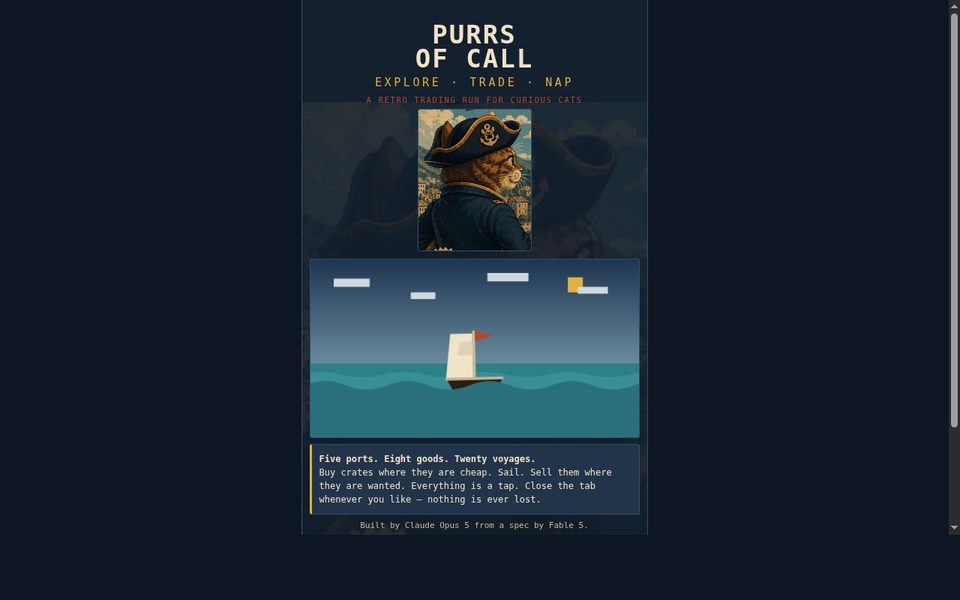
Purrs of Call
A tap-only maritime trading run crewed by cats — five ports, eight goods, twenty voyages. Buy crates where they are cheap, sail, sell them where they are wanted. It asks the oldest question in the genre: is choosing cargo and routes satisfying enough to carry a whole game? Its answer is two mechanics pointed straight at the usual failure mode of finding one profitable pair and grinding it forever — markets that saturate as you sell into them, and a ledger that goes stale.
It is also the first experiment here where the model being measured is not Fable: Fable wrote the spec, and Opus 5 built the game from it.
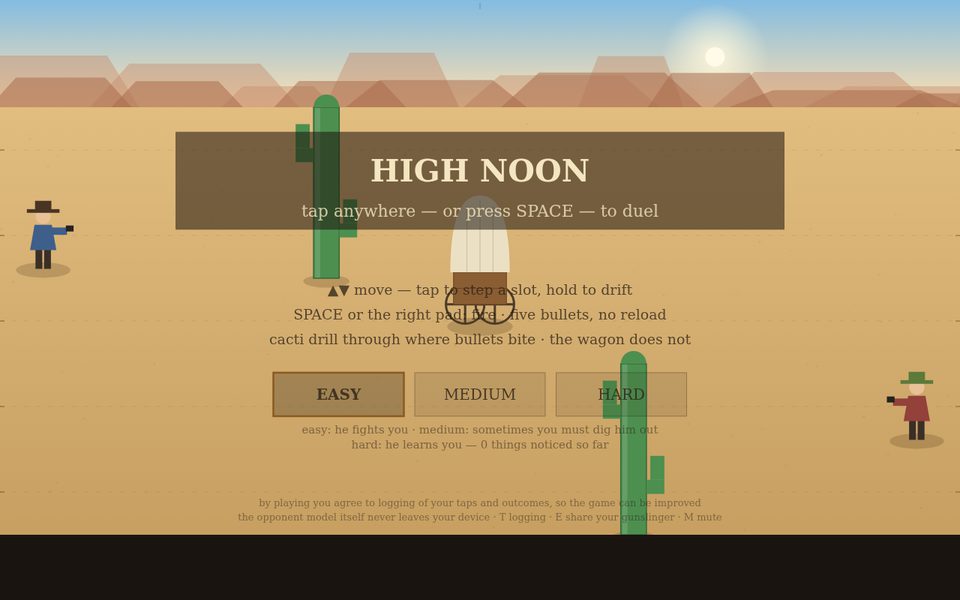
High Noon
A 30-second western duel against an opponent that learns you — a ~2 KB model trained locally in your browser on your own duels. Not an LLM: no prompts, no server, just a few hundred counters filling in a table of your habits. It will show you the table.
Caravan
A desert crossing where a small language model actually drives the gameplay — making decisions the game is built around, rather than a chatbot bolted onto the side. One interface, two interchangeable backends.
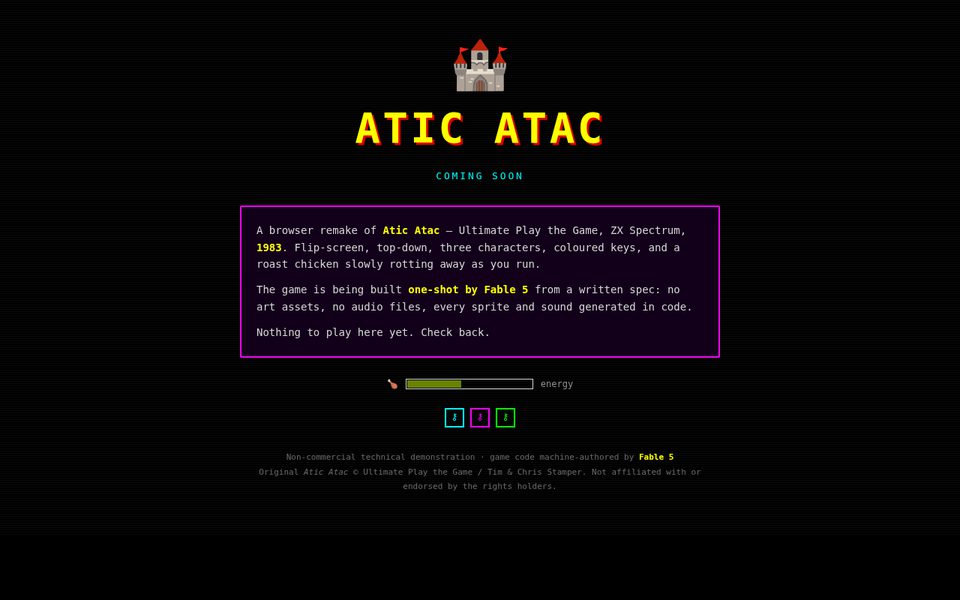
Atic Atac
A remake of the 1983 ZX Spectrum classic, built by one model alone with no baseline to race against. Flip-screen romp through a haunted castle: Knight, Wizard or Serf, coloured keys and doors, and a rotting-chicken health meter.
Try Fable
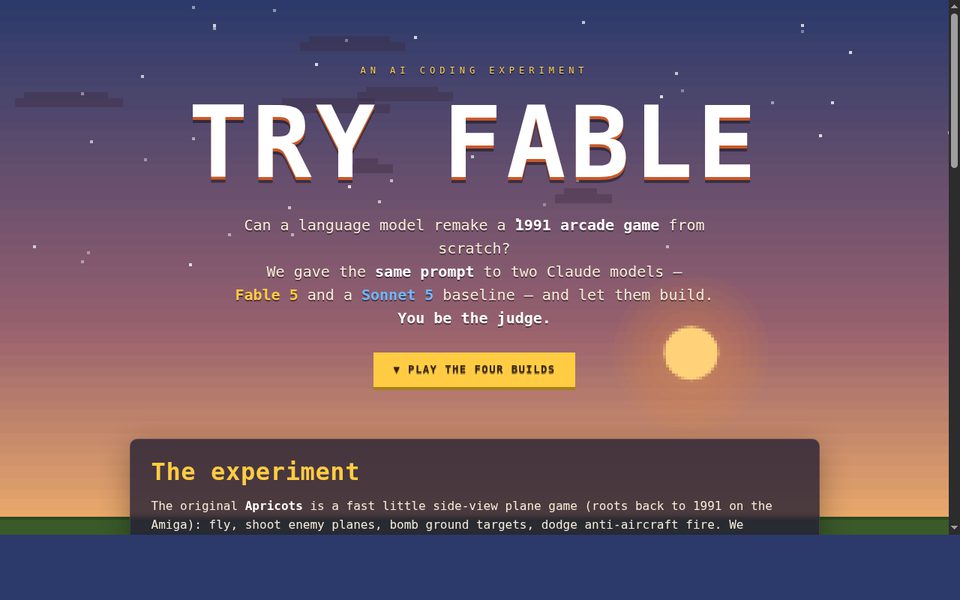
Model versus model. The 1991 arcade game Apricots was reverse-engineered into a precise spec, then two models got the same brief and built it independently — each producing a faithful 2D port and a low-poly 3D take. Play them side by side and judge.
Also here
Not part of the numbered series — other things worth playing with.
Claude of Duty
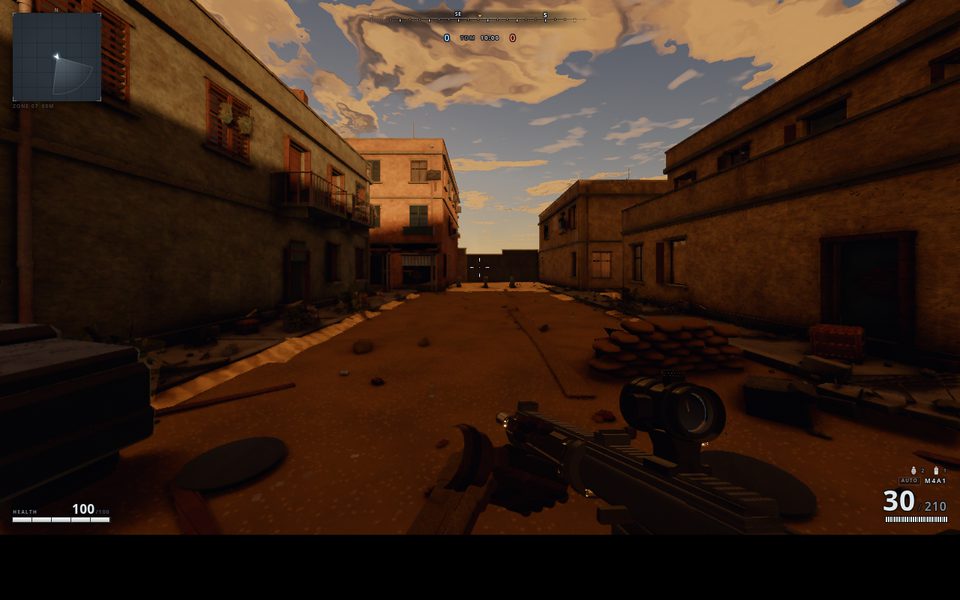
A first-person shooter in the browser — 67,000 lines of WebGL2, written by a fleet of AI agents working in parallel. No art assets at all: every texture, mesh, animation and sound is generated from code at load. The whole game downloads in under half a megabyte.
Galactic Trader
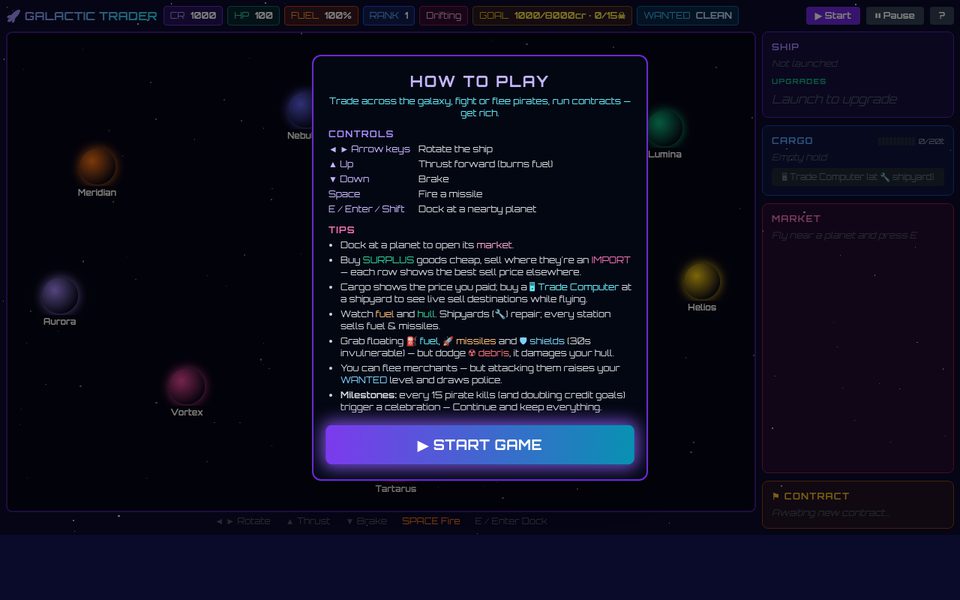
Fly between planets, buy low and sell high, run contracts, and fight or flee the pirates and the law. A top-down space trading sim with no engine behind it — the whole thing is plain DOM, no build step, no canvas.

ASCII Video
A real-time ASCII art renderer running on WebGL. Point it at a video or your webcam and watch it redraw the world in text, live, at full frame rate.
DuoTetris
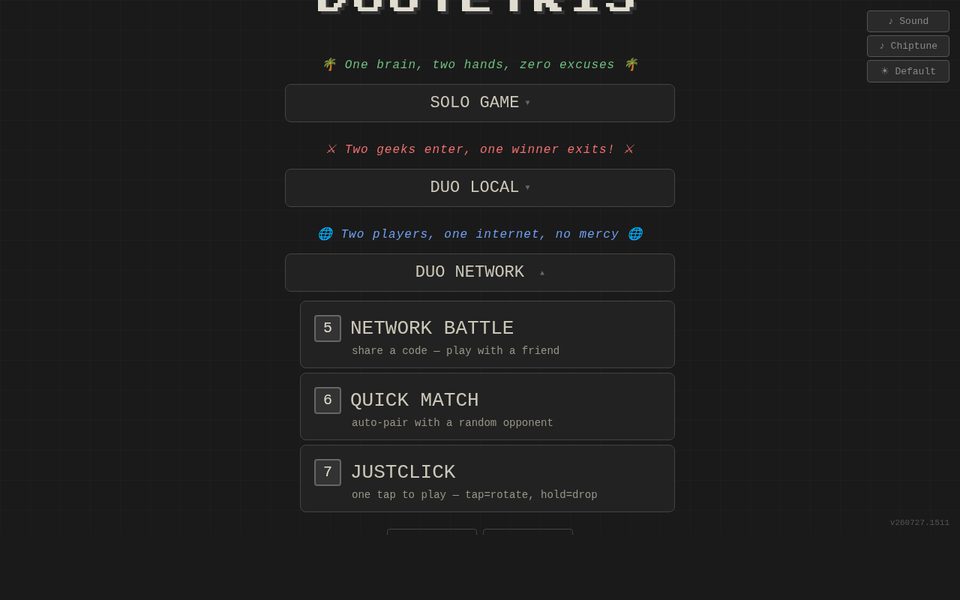
Two-player battle Tetris in the browser. Same board, same falling pieces, one keyboard — clear lines to bury your opponent in junk.